
Fact checking basics: A practical guide to verifying information
What fact checking is and why it matters
Fact checking is the process of testing a factual statement against reliable evidence. It can help readers decide what is known, what is uncertain and what may have been presented out of context. These fact checking basics are useful whenever a claim could affect someone’s understanding or be passed on to others.
How fact checking differs from opinion and interpretation
A fact-checkable claim can be assessed against evidence: for example, whether an event happened on a particular date or whether a document contains a quoted sentence. Opinions express a judgement or preference, while interpretations explain what facts might mean. Those can be reasoned and informed, but they are not verified in quite the same way as a concrete statement.
A piece of writing may combine all three. A report might state a measurable fact, interpret its significance and then argue for a particular response. Separating those parts helps a reader assess what the evidence can establish without treating every conclusion as a settled fact.
When a claim needs verification
Verification is especially useful when a claim is surprising, consequential, widely shared or difficult to reconcile with what other reliable sources say. A precise statement about a person, place, date or event is often a good starting point, because it can be tested more directly than a sweeping assertion. A familiar claim may still deserve checking if it is being repeated as evidence for a new argument.
Not every casual comment needs a full investigation. The time spent checking can be proportionate to the claim’s importance and the likelihood that it will mislead someone. When a decision depends on the answer, it is worth slowing down and looking beyond a headline or short social post.
How misinformation can spread
Information can travel further than its original context. A sentence may be clipped from a longer discussion, an old photograph may be recirculated as new, or an uncertain report may become more definite as people repeat it. None of these changes proves that a claim is false, but each can make a reader less able to judge its accuracy.
Emotion and speed can also encourage sharing before anyone checks the source. A careful reader pauses to separate what the post actually shows from what its caption asks them to believe. That small distinction can stop an unsupported interpretation from being passed along as established fact.
Identify the claim you need to check
A useful fact check begins with a clear question, not a general feeling that something seems wrong. The reader can write down the claim in plain language and identify what evidence would help confirm or challenge it. This makes the task manageable and keeps the investigation focused on the statement that matters.
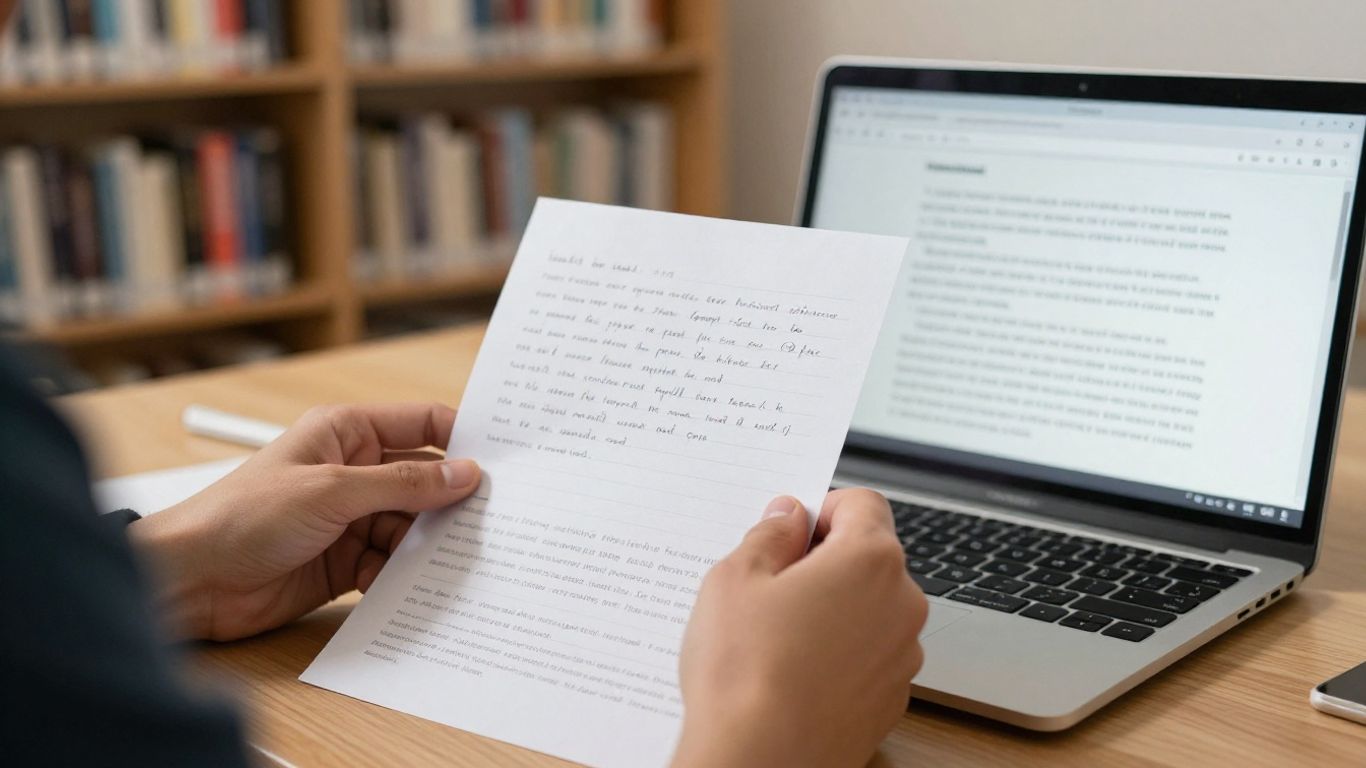
Separate verifiable statements from broad opinions
A sentence such as “the council published a new plan in May” contains details that can be checked against a publication record and a date. A statement such as “the plan is a failure” is an evaluation; its meaning depends on what the speaker considers success. It may still contain factual claims worth checking, but the opinion itself is not a simple true-or-false question.
Readers can underline the parts that refer to observable events, records or measurable details. They can then ask whether the remaining language expresses a value judgement, prediction or interpretation. This keeps a strong opinion from disguising several separate claims as one fact.
Break complex claims into smaller questions
A complicated post may combine a statistic, an explanation of its cause and a prediction about what will happen next. Each part needs different evidence, so it helps to separate them before searching. A short set of questions can keep that work orderly:
- What specific event or result is being described?
- Which people, place or period does the claim refer to?
- What source is offered as evidence?
- Does the claim make a separate argument about cause or consequence?
Once the parts are visible, the reader can check them individually and then consider whether they support the post’s overall conclusion. Evidence for one part does not automatically prove the rest.
Note the claim’s date, location, and context
A claim can be accurate in one place or period and misleading in another. Before searching, record when it was made, which location it concerns and whether it refers to a current situation or a past one. These details can reveal that a much-shared statement relies on old information or has been applied to the wrong setting.
Context also includes the format in which the claim appeared. A quotation in a speech, a caption under a photograph and a summary in a news report each have different surrounding information to check. Keeping those details together makes it easier to compare sources that may be discussing different things.
Trace a claim to its original source
A claim often reaches readers through several layers of retelling. Someone may quote a report that summarises a study, which in turn cites an earlier record. Following those links backwards can show whether the statement rests on direct evidence or on repeated summaries.
Find the earliest available version
Search for a distinctive phrase from the claim, then look for the oldest available post, document or report that contains it. An early version is not automatically accurate, but it can clarify where the wording came from and whether later versions changed it. Dates, links and archived copies may help when the original page has moved or disappeared.
As the trail develops, note where each source points next. If several pages all rely on the same original report, they are not necessarily independent confirmation. The aim is to locate the material closest to the event or evidence, then assess it on its own merits.
Check who created or published the content
The identity and role of a source can help explain what it is positioned to know. A named author, organisation or public office may have relevant expertise or direct access to records, but a title alone does not establish that a particular claim is sound. Readers can look for an author’s stated qualifications, the publisher’s purpose and the source’s own references.
It is also useful to ask whether the source distinguishes reporting from commentary and whether it explains how its information was gathered. Missing attribution does not prove deception, but it limits the reader’s ability to verify the material. The source’s claims should still be checked against the evidence it provides.
Look for missing context in quotes, images, and clips
Short excerpts can leave out a qualification, question or surrounding event that changes how the material reads. When a quote is central to a claim, search for the full speech, interview, transcript or document if available. For a photograph or video, look for its original publication and compare visible details with the stated place and date.
A useful guiding rule is to distinguish the material itself from the caption attached to it.
A fragment can be genuine and still give an incomplete account.
That distinction helps readers avoid the false choice between calling content fabricated and accepting every interpretation placed on it. It also points to the next task: finding enough surrounding material to judge what the fragment supports.
Evaluate the evidence
Once a source has been located, the next question is whether its evidence can bear the weight of the claim. A confident tone or a polished presentation is not a substitute for documents, data or methods that can be examined. The reader should look at how the information was produced and what its limits might be.
Prioritize primary sources and original records
Primary sources include material created close to the event or process being discussed, such as a published dataset, a direct statement, a court or government record, or the original research paper. These sources can provide detail that a summary leaves out. They still need careful reading: a document may be incomplete, difficult to interpret or relevant to only part of a claim.
When an article cites an original record, open it rather than relying only on the description. Check the date, definitions and scope, and note whether the record addresses the same people or period as the claim. A source being primary does not make every conclusion drawn from it correct.
Assess expertise, methods, and possible conflicts of interest
Expertise matters most when it matches the subject and the work being assessed. Readers can check who collected or analysed the information, what method they used and whether the explanation is clear enough to follow. If a source has a stated interest in the outcome, that context is worth noting without assuming it automatically invalidates the evidence.
A few practical questions can help keep the assessment specific: who gathered the material, how was it selected, and what uncertainty does the source acknowledge? A method that cannot be described or examined gives readers less reason to rely on the conclusion. Transparency allows others to assess whether the evidence is being used fairly.
Match the evidence to the exact claim
Evidence can be accurate yet fail to support the statement attached to it. A record may show that something happened, but not why; a small example may illustrate a pattern without showing how common it is. The reader should compare the claim’s wording with the source’s actual finding, including any qualifications.
It helps to restate the claim beside the evidence in neutral terms. If the source answers a narrower question, the conclusion should stay narrow too. This is where a careful fact check often becomes less dramatic but more useful: it shows precisely what can be said, and what remains an inference.
Cross-check information with other sources
A single source can provide a useful lead, but checking how independent sources handle the same claim can reveal gaps or disagreement. The goal is not to count pages repeating the same wording. It is to find other evidence with a separate basis and see whether the main details hold up.
Compare independent reporting and official data
Look for reporting that links to its evidence and explains how the information was obtained. Official records may clarify dates, definitions or totals, while independent reporting can supply context or identify limitations in those records. Each source has a different role, and neither should be accepted without examining what it actually establishes.
Before treating several reports as confirmation, check whether they rely on the same statement, wire report or dataset. Repetition can create the appearance of broad agreement without adding new evidence. A genuinely separate account is more helpful when it reaches the point independently and makes its basis clear.
Search for credible corrections or contrary evidence
A sound check includes a search for information that could challenge the initial impression. Look for corrections, updates, responses from people named in the claim and evidence that points in a different direction. This is not a hunt for any disagreement; the contrary material should be assessed for its source and relevance just like supporting material.
A deliberate search for weaknesses can be guided by a few questions:
- Has the source amended or corrected its account?
- Is there a more recent record that changes the picture?
- Do reliable sources disagree about the same detail?
- Does contrary evidence address the claim directly?
The answers may strengthen the original conclusion or require it to be narrowed. Either way, considering the best available challenge is more informative than stopping once a supportive source appears.
Use reverse image and video searches when relevant
When a claim depends on an image or clip, search tools that find other appearances of the material can help identify an earlier publication or different caption. Compare the setting, weather, visible landmarks and other details with the claim being made. These clues can point to a mismatch, though they do not by themselves establish the full history of the image.
A match may lead to the original source, but the reader still needs to check its date and context. Cropping, editing and reposting can complicate what a search result reveals. Treat the tool as a way to find leads, then verify those leads against the earliest available material.
Decide what the evidence supports
The final judgement should describe the evidence rather than force it into a dramatic yes-or-no answer. Some claims are well supported, some use true details in a misleading way, and others remain unresolved because key information is unavailable. A clear account tells readers which of those situations applies and why.
Distinguish confirmed, misleading, and unverified claims
A claim is supported when reliable evidence directly backs its central details. It may be misleading when it uses accurate information but omits context or invites a conclusion the evidence does not establish. A claim is unverified when the available material is not enough to confirm or refute it; that label is not the same as proof that it is false.
The wording of the conclusion should match the strength of the sources. If only part of a statement checks out, say which part and explain the qualification. This is more precise than using a broad label that hides what was actually examined.
Account for uncertainty and changing information
Some facts become clearer as records are released or reporting develops. In those cases, a conclusion should include when it was checked and what information was available at that point. A later update may change the answer, and acknowledging that possibility is part of careful verification rather than a failure of it.
Uncertainty can also come from limits in the evidence itself. A source may provide an estimate, a preliminary result or an incomplete account. Readers can describe those limits plainly, without making the evidence sound stronger or weaker than it is.
Share findings with clear links and context
When sharing a fact check, include the original claim and the sources that matter most. Explain how the evidence relates to the wording, and flag any important limitation or change over time. A link without an explanation may leave readers to repeat the same assumptions that made the claim confusing in the first place.
A useful summary is concise but not stripped of context. It should let another person follow the reasoning, reach the cited source and understand what remains uncertain. That makes the result easier to assess, correct and update if new information appears.
Conclusion
Fact checking is a practical habit of asking what a claim says, where it came from and whether the evidence genuinely supports it. By tracing sources, checking context and accounting for uncertainty, readers can share information more carefully without claiming more than the facts allow.
Frequently Asked Questions
What does fact checking mean?
Fact checking means assessing a factual claim against evidence to determine what is supported, contradicted or still uncertain.
How can someone choose a claim to check?
Start with a specific, consequential statement that can be tested against records, direct evidence or reliable reporting.
Is an opinion something that can be fact checked?
An opinion is a judgement, not usually a true-or-false statement. Any factual details used to support it can still be checked.
Why should readers look for the original source?
The original material can reveal whether later summaries preserve the wording, date, scope and qualifications of the evidence.
Are official sources always reliable?
Official sources can be useful, but readers should still check their scope, definitions, methods and relevance to the claim.
What should someone do when evidence is incomplete?
State what is known, explain what is missing and describe the claim as unresolved or unverified rather than guessing.
How can a reader check whether an image is out of context?
Search for earlier appearances of the image, inspect its original source where possible, and compare the date and setting with the claim attached to it.